
Best Multi Channel Selling Software: 2026 Reviews

Table of Contents
- Best Multi Channel Selling Software Reviews: Top 10 Picks for 2026
- 1. Embed360, Best for Etsy Sellers Expanding to Social and Web Channels
- 2. Sellbrite, Best for Small to Mid-Sized Marketplace Sellers
- 3. Linnworks, Best for Enterprise-Level E-Commerce Automation
- 4. Veeqo, Best Free Shipping and Inventory Solution
- 5. Feedonomics, Best for Large-Scale Product Feed Management
- 6. CedCommerce, Best for Platform-Specific Marketplace Connectors
- 7. ShipStation, Best for High-Volume Shipping and Order Fulfillment
- 8. Brightpearl, Best Retail Operating System for High-Growth Brands
- 9. GeekSeller, Best Budget Option for Walmart and Marketplace Sellers
- 10. ChannelAdvisor, Best Enterprise Platform for Global Channel Breadth
- Feature and Pricing Comparison Table
- How to Choose Multi Channel Software: A Practical Decision Framework
- Multi-Channel Inventory Management Software: What Sets the Best Apart
- Total Cost of Ownership and Technical Debt: What Review Sites Don’t Tell You
- Best Practices for Multi-Channel Selling That Drive Real Results
- Which Multi Channel Selling Software Should You Choose?
- Conclusion
Last Updated: June 4, 2026
Best Multi Channel Selling Software Reviews: Top 10 Picks for 2026
Finding the right best multi channel selling software review is harder than it looks. Most comparison articles list the same five tools, paste in feature tables, and call it a day. This guide goes deeper, covering real trade-offs, total cost of ownership, and the angles review aggregators consistently miss. Below, we’ll walk through 10 platforms ranked by use case, show you how to evaluate them, and flag the hidden costs that only show up after you’ve signed a contract.
The core tension in multi-channel selling software: tools built for simplicity rarely scale, and tools built for scale rarely feel simple. Picking the wrong one creates technical debt that takes months to unwind.

Multi-channel selling software is a centralized platform that synchronizes inventory, listings, pricing, and order management across multiple sales channels simultaneously, eliminating manual updates on each platform individually.
Here’s what most guides get wrong: they treat every seller the same. An Etsy maker expanding to Instagram has completely different needs from a wholesale brand managing Amazon FBA, Shopify, and NetSuite. The right tool depends on where you are, not where you want to be in three years.
1. Embed360, Best for Etsy Sellers Expanding to Social and Web Channels
Embed360 is the top pick for Etsy sellers who want to expand beyond the marketplace without rebuilding their entire operation. It syncs listings, images, pricing, and inventory in real time across WordPress, Shopify, Wix, Squarespace, Facebook, Instagram, and Google Shopping. One-click setup for Facebook and Instagram shops means most sellers are live across social commerce channels within an hour.
What sets Embed360 apart is its AI-powered listing optimization. The Listings Genie feature writes conversion-focused product descriptions and optimizes titles for both Etsy search and Google Shopping feeds automatically. The Etsy Embed feature displays your Etsy listings on your own website with real-time syncing, so price and inventory changes propagate instantly.
Pricing: Free plan available. Paid tiers listed on the Embed360 pricing page.
Pros:
- Real-time SKU synchronization across all connected channels
- AI-powered listing optimization for titles and descriptions
- One-click Facebook and Instagram shop setup
- Automatic Google Shopping feed updates
- No manual inventory management required
Cons:
- Built specifically for Etsy sellers; not the right fit for brands without an Etsy presence
Use Embed360’s AI listing optimization before expanding to new channels. A listing that converts well on Etsy will transfer that conversion strength to Google Shopping and social commerce with minimal additional editing.
2. Sellbrite, Best for Small to Mid-Sized Marketplace Sellers
Starting at $49/month, Sellbrite targets sellers who need centralized inventory synchronization across Amazon, eBay, Walmart, and Etsy without enterprise-level complexity. Bulk listing management with customizable templates is genuinely useful for sellers managing hundreds of SKUs. One honest limitation: FBA multi-channel fulfillment requires an additional monthly add-on, factor that into your total cost of ownership before committing.
Best for: Small to mid-sized sellers scaling across multiple marketplaces.
Pros: Intuitive interface, strong tutorials and support resources
Cons: FBA multi-channel fulfillment is an add-on cost
3. Linnworks, Best for Enterprise-Level E-Commerce Automation
Linnworks unifies inventory management, order routing, and shipping workflows across dozens of channels with advanced stock forecasting and an extensive API for custom integrations. The real power is automated order routing: rules-based logic that sends orders to the right warehouse or 3PL based on stock levels, geography, or carrier preference. The downside is cost, Linnworks is priced for mid-market and enterprise retailers.
Best for: Mid-market to enterprise retailers needing ERP-like capabilities.
Pros: Highly scalable, strong warehouse management
Cons: Expensive for smaller operations; contact for pricing
4. Veeqo, Best Free Shipping and Inventory Solution
Amazon owns Veeqo, and that shows in the depth of its Amazon ecosystem integration. The free shipping tier includes unlimited shipping labels with pre-negotiated carrier rates, genuinely rare at no cost. Automated inventory sync covers Shopify, eBay, Amazon, and other major channels, and the profit analyzer gives a consolidated view of margin by channel.
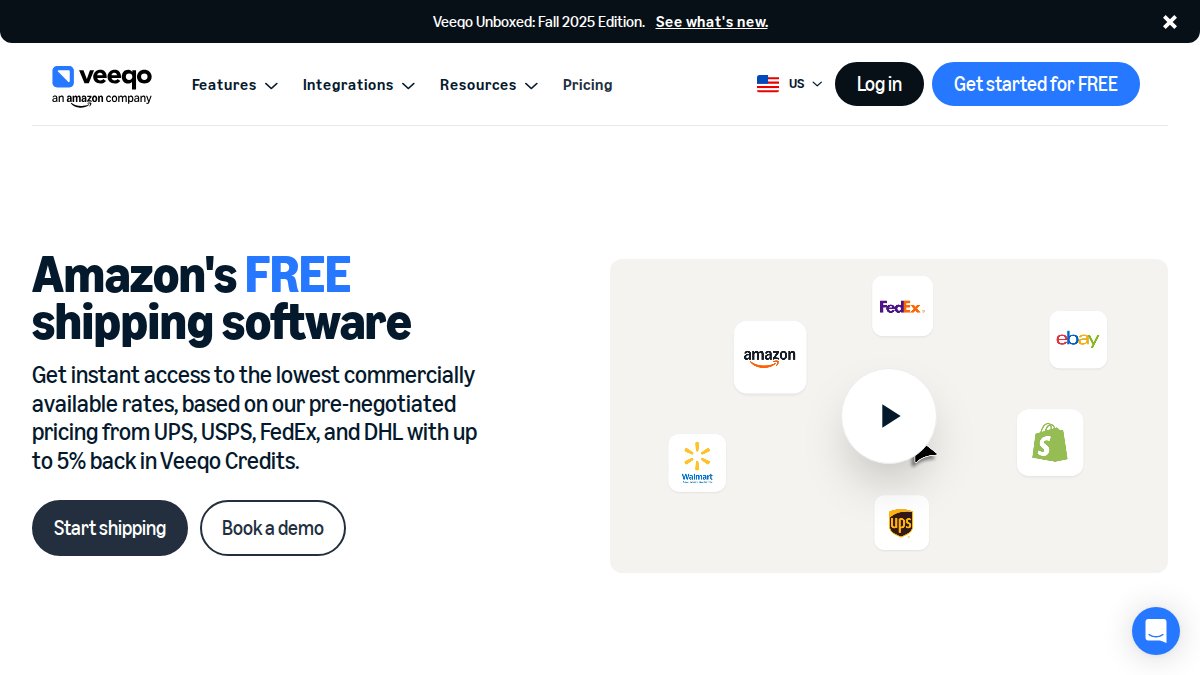
Best for: Cost-conscious sellers who prioritize shipping efficiency.
Pros: Free shipping software tier, deep Amazon integration, demand forecasting
Cons: Some advanced reporting and inventory features require paid tiers
5. Feedonomics, Best for Large-Scale Product Feed Management
Feedonomics handles automated product data aggregation, transformation, and syndication to Google Shopping, Amazon, TikTok, and dozens of other channels. The differentiator is 24/7 support from dedicated feed specialists, large brands managing complex data mapping across thousands of SKUs need human expertise, not just software. Pricing is custom and generally higher-end.
Best for: Large brands and agencies with high SKU counts and complex feed requirements.
Pros: Exceptional full-service support, handles massive data volumes
Cons: Custom pricing; cost is prohibitive for smaller operations
6. CedCommerce, Best for Platform-Specific Marketplace Connectors
Some sellers don’t need a full multi-channel platform, they need one reliable connector between their Shopify or Magento store and a specific marketplace like Walmart or Temu. Real-time inventory and order synchronization, bulk CSV product updates, and custom pricing thresholds per marketplace make it practical for store owners who want surgical integrations. Pricing varies significantly by integration, so get a clear quote upfront.
Best for: Shopify and Magento store owners needing specific marketplace connectors.
Pros: Specialized connectors, 24/7 technical support
Cons: Pricing varies by integration; not a full multi-channel solution
7. ShipStation, Best for High-Volume Shipping and Order Fulfillment
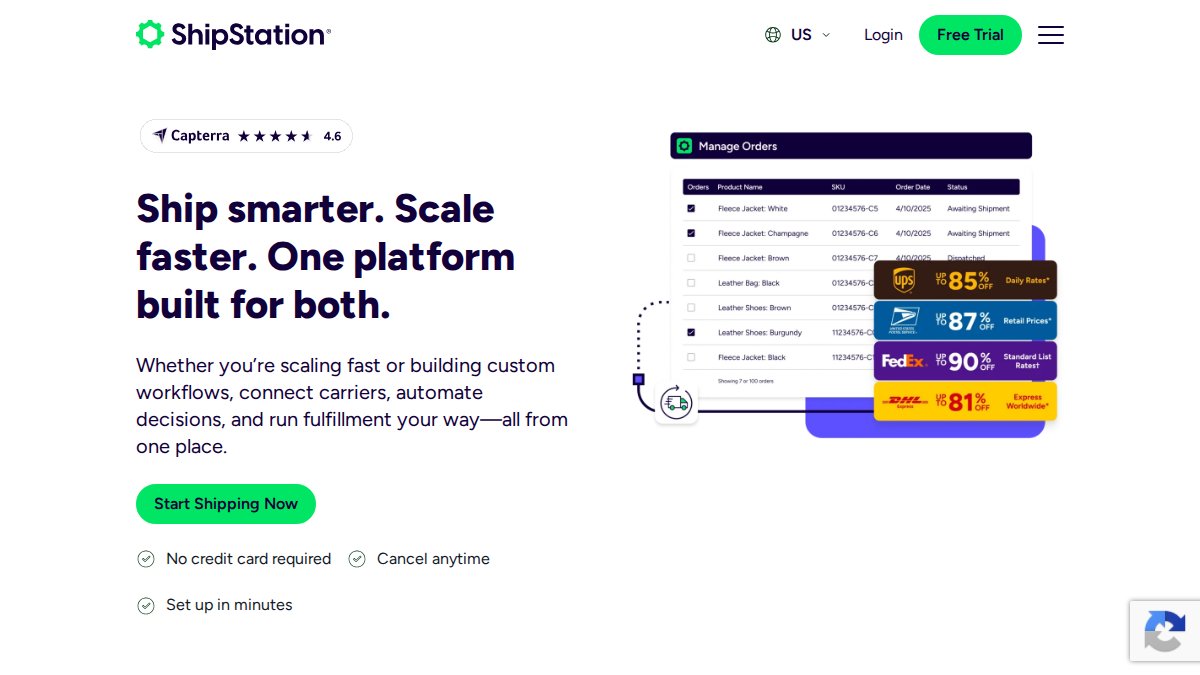
ShipStation imports orders from hundreds of sales channels into a single dashboard, applies automated shipping configurations, prints labels, and handles branded tracking and return portals. Integration with Amazon Multi-Channel Fulfillment (MCF) is a significant advantage for sellers using FBA as a 3PL for non-Amazon orders. The honest limitation: sellers who also need deep inventory management and listing synchronization will need to pair it with another platform.
Best for: E-commerce businesses focused on shipping and fulfillment optimization.
Pros: Extensive carrier and channel integrations, clean high-volume interface
Cons: Limited inventory management depth; contact for pricing
8. Brightpearl, Best Retail Operating System for High-Growth Brands
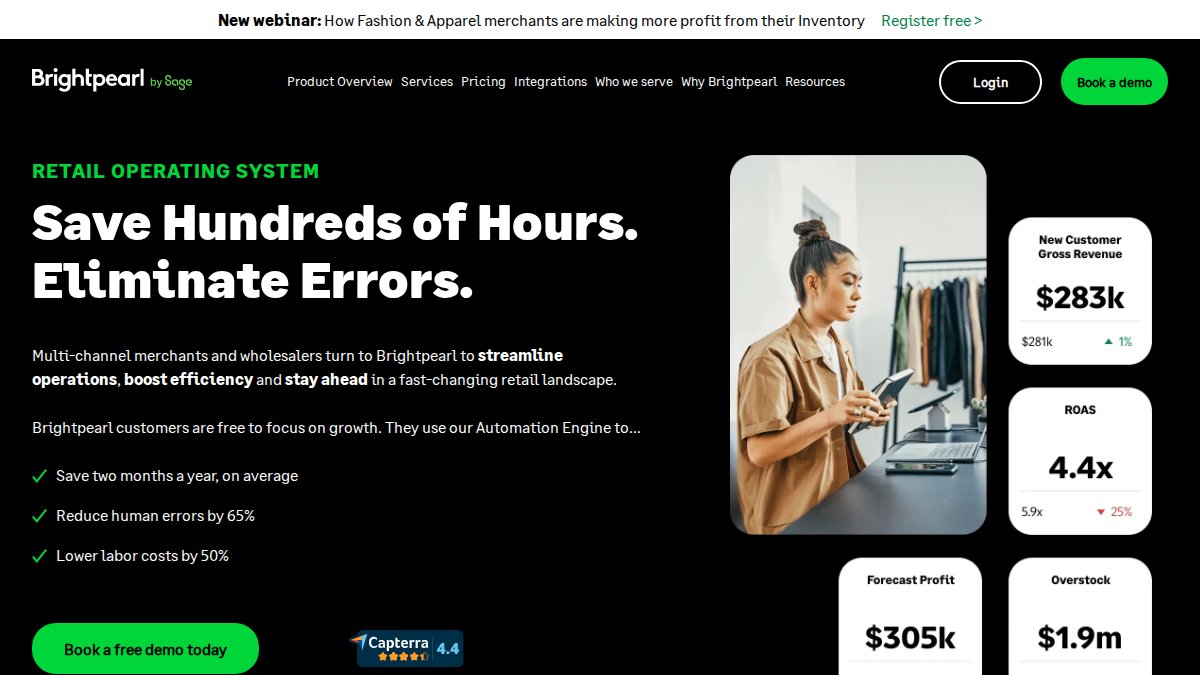
Brightpearl positions itself as a retail operating system (ROS), not just inventory software. Its automation engine handles order processing, and real-time financial reporting connects directly to QuickBooks and NetSuite. For high-growth brands that have outgrown standalone tools, the unified approach to operations and finance is genuinely valuable. Budget for a proper onboarding period, implementation is time-consuming and complex.
Best for: High-growth retail brands needing unified operations and financial reporting.
Pros: Comprehensive retail features, strong automation, accounting integration
Cons: Complex implementation; contact for pricing
9. GeekSeller, Best Budget Option for Walmart and Marketplace Sellers
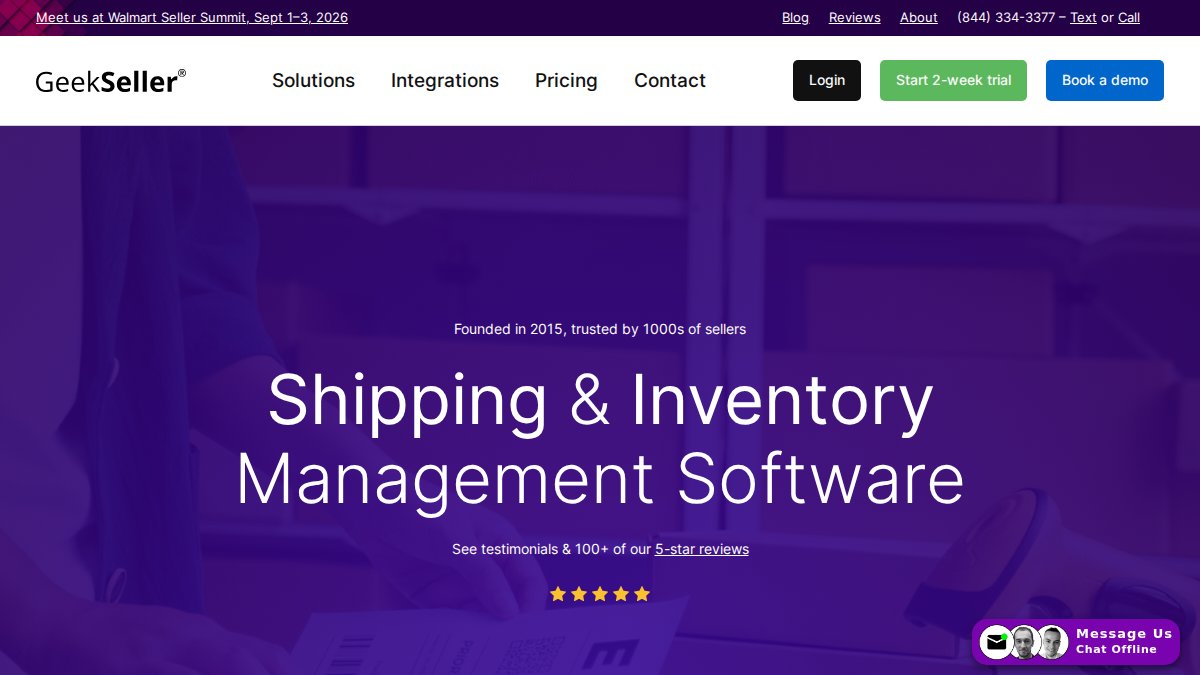
At $9/month entry pricing, GeekSeller is the most affordable option on this list. The centralized dashboard handles order and inventory sync across Walmart, eBay, TikTok, and Amazon, with specific support for Walmart Fulfillment Services (WFS). Some advanced features are still in development, which limits it for complex requirements, but for straightforward marketplace management on a tight budget, it’s hard to argue with the price.
Best for: Budget-conscious sellers expanding into Walmart and major marketplaces.
Pros: Affordable entry pricing, strong Walmart-specific integrations
Cons: Some advanced features still in development
10. ChannelAdvisor, Best Enterprise Platform for Global Channel Breadth
ChannelAdvisor supports hundreds of channels globally, with advanced marketplace management, digital marketing integration, product data optimization, and competitive intelligence built in. For large enterprise brands managing first-party and third-party selling across international markets, its depth is unmatched. Very high cost and long-term contract requirements make it unsuitable for smaller operations, this is a platform you grow into.
Best for: Large enterprise brands with complex global multi-channel needs.
Pros: Unmatched channel reach, powerful analytics
Cons: High cost, long-term contracts required; contact for pricing
Feature and Pricing Comparison Table
| Tool | Starting Price | Free Tier | Best For | Key Strength |
|---|---|---|---|---|
| Embed360 | See pricing page | Yes | Etsy sellers expanding to social/web | AI listing optimization + real-time sync |
| Sellbrite | $49/month | No | Small-mid marketplace sellers | Centralized inventory + FBA integration |
| Linnworks | Contact for pricing | Yes | Enterprise automation | Order routing + API depth |
| Veeqo | $19/month | Yes | Cost-conscious shippers | Free shipping labels + Amazon integration |
| Feedonomics | Custom | No | Large-scale feed management | Full-service feed specialists |
| CedCommerce | Contact for pricing | No | Platform-specific connectors | Walmart, Temu, niche marketplace sync |
| ShipStation | Contact for pricing | No | High-volume fulfillment | Carrier integrations + label automation |
| Brightpearl | Custom | No | High-growth retail brands | ROS with QuickBooks/NetSuite integration |
| GeekSeller | $9/month | No | Budget Walmart sellers | Affordable WFS support |
| ChannelAdvisor | Custom | No | Global enterprise brands | Hundreds of channels + competitive intel |
How to Choose Multi Channel Software: A Practical Decision Framework
The wrong framework is "which tool has the most features." The right framework is "which tool solves my specific bottleneck without creating new ones."
Use this decision matrix before you start a trial:
- What is my current primary sales channel? (Etsy, Shopify, Amazon, etc.)
- Which channels do I want to add in the next 12 months?
- What is my monthly order volume?
- Do I manage my own warehouse, use FBA, or work with a 3PL?
- Do I need accounting software integration (QuickBooks, NetSuite)?
- What is my realistic monthly software budget including add-ons?
- How much implementation time can I actually commit to?
If your answers point to Etsy as your base and social commerce as your expansion target, Embed360 is the clear fit. If you’re running 10,000+ orders monthly across global marketplaces, you’re in ChannelAdvisor or Linnworks territory.
Key Features to Look for in Multi-Channel Listing Software
Real-time SKU synchronization prevents overselling. When a product sells on Amazon, your Etsy and Shopify listings need to update immediately, stockouts and overselling both stem from poor synchronization and directly damage seller reputation.
Centralized dashboard for order management means your team isn’t toggling between five browser tabs. Look for consolidated order routing with status visibility across all channels in one view.
Product Information Management (PIM) compatibility matters as your catalog grows. Data consistency across channels, accurate field mapping, and bulk listing tools all fall under this category.
API connectivity for 3PLs, accounting software, and custom integrations determines how far the platform can grow with your business. Limited API access creates technical debt that compounds over time.
Listing optimization tools directly affect conversion rate. AI-powered title and description generation, like what Embed360 provides, improves search visibility without additional copywriting overhead.
Common Challenges in Multi-Channel Management to Plan For
Data mapping is the unglamorous work of translating product data into each channel’s required format. A field called "material" on Etsy might need to be "fabric_type" on another marketplace. The quality of a platform’s mapping tools determines how much manual work lands on your team.
Channel compliance is a moving target. Amazon, Walmart, and Google Shopping each update listing requirements regularly. Platforms that push automatic feed updates, like Feedonomics for large catalogs or Embed360 for Etsy-based sellers, absorb this maintenance burden.
Implementation timelines are consistently underestimated. A platform like Brightpearl can take weeks to configure properly. Rushing implementation is the most common reason sellers end up with a tool they don’t actually use.
Never assume a platform’s advertised integration list reflects full functionality. “Supports Walmart” can mean anything from full two-way sync to a basic order import. Always test the specific integration you need during the trial period before committing.
Multi-Channel Inventory Management Software: What Sets the Best Apart
Inventory management is where multi-channel software either earns its cost or exposes its limitations. The gap between platforms that handle inventory well and those that handle it adequately is wider than most reviews suggest.
SKU Synchronization and Real-Time Stock Updates
Real-time stock updates across all connected channels prevent the two outcomes that damage seller reputation most: stockouts and overselling. The best platforms maintain a single source of truth for inventory and push updates to all channels simultaneously when a sale occurs. Platforms that sync on a scheduled interval introduce a window where overselling is possible during high-traffic periods.
According to Shopify’s commerce trends research, inventory visibility across channels is one of the top operational challenges for scaling e-commerce brands. Veeqo and Linnworks both handle high-volume SKU synchronization well. For Etsy-based sellers, Embed360’s real-time sync covers the specific combinations that matter: Etsy to Shopify, Wix, Squarespace, and social commerce simultaneously.
Order Management, Routing, and 3PL Integration
Basic OMS functionality consolidates orders from multiple channels into one view. Advanced OMS functionality routes those orders automatically to the optimal fulfillment location based on rules you define. If you’re routing orders across multiple warehouses or 3PLs based on geography or stock levels, you need genuine order routing logic, not just order consolidation. Linnworks and Brightpearl both offer this depth. ShipStation handles shipping label automation without the full inventory management layer.
The difference between order consolidation and order routing is the difference between a tool that shows you orders and a tool that intelligently processes them. For operations with multiple fulfillment locations, routing logic is non-negotiable.
Total Cost of Ownership and Technical Debt: What Review Sites Don’t Tell You
Total cost of ownership (TCO) for multi-channel software extends well beyond the monthly subscription fee.
Add-on costs are the most common surprise. Sellbrite’s FBA multi-channel fulfillment is an add-on. Many platforms charge separately for additional marketplaces, users, or advanced reporting. Always request a full breakdown at your expected order volume before signing.
Migration costs apply when switching platforms. Exporting product data, remapping fields, and re-establishing marketplace connections takes real time. For catalogs with hundreds of SKUs, budget for professional migration support or several weeks of internal work.
Technical debt accumulates when platforms rely on brittle API connections or lack native integrations for your specific channels. According to Gartner’s analysis of e-commerce platform architecture, API limitations are among the top reasons mid-market retailers switch platforms within 24 months of initial adoption.
Implementation timelines affect operational continuity. Enterprise platforms like Brightpearl and ChannelAdvisor require structured onboarding spanning weeks. Simpler platforms like Embed360 and GeekSeller are designed for rapid setup with one-click channel connections.

The honest TCO calculation: monthly fee + add-on fees + implementation time cost + migration cost from your current setup + estimated cost of switching again in 2-3 years if the platform doesn’t scale.
Best Practices for Multi-Channel Selling That Drive Real Results
The best practices that actually move the needle are about architecture, how you structure your operation before you scale.
(/tag/multi-channel-selling/) That Drive Real Results]
Establish one source of truth for product data. Every channel-specific listing should originate from a central product record. When you update a price or description in one place, it propagates everywhere. Platforms that enforce this architecture prevent the data consistency problems that plague multi-channel operations at scale.
Optimize listings before syndicating them. Syncing a mediocre listing to five channels multiplies a mediocre listing. Use AI-powered tools like Embed360’s Listings Genie to improve titles and descriptions before distributing, a well-optimized listing improves conversion rate across every channel it appears on.
Prioritize channels by margin, not just volume. Amazon FBA fees, Etsy transaction fees, and Walmart marketplace fees all affect net margin differently. Run the numbers by channel before deciding where to invest listing and advertising effort.
Build your own channel alongside marketplace channels. Relying entirely on third-party marketplaces creates platform dependency risk. Sellers who also drive traffic to their own Shopify or WordPress store through Google Shopping and social commerce are more resilient to marketplace policy changes, exactly the expansion path Embed360 is designed to support.
According to BigCommerce’s multi-channel retail guide, sellers who actively manage three or more channels tend to see meaningfully higher overall revenue than single-channel operators, though operational complexity increases proportionally. The right software reduces that complexity back to manageable levels.
Treat social commerce as a real channel, not an experiment. Facebook and Instagram shops have matured significantly. Sellers who treat social commerce as a primary channel are capturing buyers who never visit traditional marketplaces.
Which Multi Channel Selling Software Should You Choose?
The answer depends entirely on your starting point and your expansion target.
You’re an Etsy seller expanding to social media and your own website: Embed360 is the clear choice. Real-time sync, AI listing optimization, and one-click social shop setup cover exactly this use case. The free plan lets you test it without commitment.
You’re a small to mid-sized seller managing multiple marketplaces: Sellbrite at $49/month gives you centralized inventory and bulk listing management. Factor in the FBA add-on cost if you use multi-channel fulfillment.
You need enterprise-level automation with complex order routing: Linnworks or Brightpearl, depending on whether your priority is e-commerce automation or retail operating system functionality with built-in accounting.
You’re primarily focused on shipping efficiency: ShipStation handles high-volume order fulfillment and carrier integrations better than any other tool on this list. Pair it with a dedicated inventory platform if needed.
You’re a large brand managing global channels: ChannelAdvisor’s channel breadth and competitive intelligence tools are unmatched at enterprise scale.
You need budget-friendly Walmart marketplace support: GeekSeller at $9/month is the most affordable entry point, including WFS support.
The best multi channel selling software review process should end with a trial, not a purchase. Every platform on this list offers some form of free access or trial period. Test the specific integrations you need with your actual product catalog before committing.
Etsy sellers ready to expand to social commerce, Google Shopping, and their own website who want real-time sync and AI listing optimization without enterprise-level complexity or cost.
Conclusion
Choosing the right multi-channel selling platform is less about finding the most feature-rich option and more about matching the tool to your current operation and realistic expansion plan. The wrong choice creates technical debt and migration costs that far exceed any subscription savings.
Embed360 is built specifically for Etsy sellers who want to expand their reach without rebuilding their entire operation. Real-time SKU synchronization, AI-powered listing optimization through Listings Genie, and one-click Facebook and Instagram shop setup mean you can be live across multiple channels without manual updates or inventory headaches. Create a free account with Embed360 and start selling across your own website, social channels, and Google Shopping from a single centralized dashboard.
Frequently Asked Questions
What is multi-channel selling software?
Multi-channel selling software is a centralized platform that lets you list, manage, and sync products, pricing, and inventory across multiple sales channels, such as Amazon, Shopify, eBay, social media shops, and Google Shopping, from a single dashboard. It eliminates manual updates, prevents overselling and stockouts, and automates order fulfillment workflows. The best multi channel selling software review options range from Etsy-focused tools like Embed360 to enterprise platforms like ChannelAdvisor.
How do I choose the best multi-channel inventory management software for my business?
Start by mapping your current and target sales channels, then evaluate each platform on SKU synchronization accuracy, order routing capabilities, API connectivity, and scalability. Consider total cost of ownership, not just the monthly subscription but also onboarding, add-ons, and migration time. Small sellers benefit from tools like Embed360 or GeekSeller, while high-volume retailers may need Linnworks or Brightpearl. Always test with a free plan or trial before committing to a paid tier.
Does multi-channel selling software integrate with Shopify and Amazon?
Yes, most leading platforms offer Shopify integration and Amazon FBA connectivity as standard features. Tools like Sellbrite, Veeqo, and Linnworks provide deep Amazon ecosystem support including FBA multi-channel fulfillment. Embed360 integrates with Shopify, WordPress, Wix, and Squarespace, plus one-click Facebook and Instagram shop setup. Always verify which specific marketplace integrations are included in your pricing tier, as some platforms charge extra for Amazon FBA or additional channel connectors.
Is multi-channel selling software worth the cost for small businesses?
For most small businesses selling on more than two channels, the time saved on manual updates and the revenue protected by preventing overselling typically justify the cost. Free tiers from platforms like Embed360 and Veeqo let you start without upfront investment. As order volume grows, the operational efficiency gains, automated listing updates, real-time stock sync, and shipping label automation, compound significantly. The key is matching the platform's pricing model to your actual SKU count and channel breadth rather than overpaying for enterprise features you won't use.
What are the best practices for multi-channel selling to avoid common mistakes?
The most important best practices for multi-channel selling include maintaining a single source of truth for product data using a PIM or centralized dashboard, setting inventory buffers to prevent stockouts, and using AI-powered listing optimization to tailor titles and descriptions per channel. Avoid launching on too many channels simultaneously, master two or three first. Ensure your software supports real-time SKU synchronization and accounting software integration with tools like QuickBooks or NetSuite to keep financials accurate across all channels.
